







Identity theft happens when someone uses your personal information, like your Social Security number or account details, to commit fraud. It can impact your finances, your credit, and your peace of mind. The good news is, you can take a few practical steps to lower your risk and can follow a clear plan if you ever spot a problem. [1]
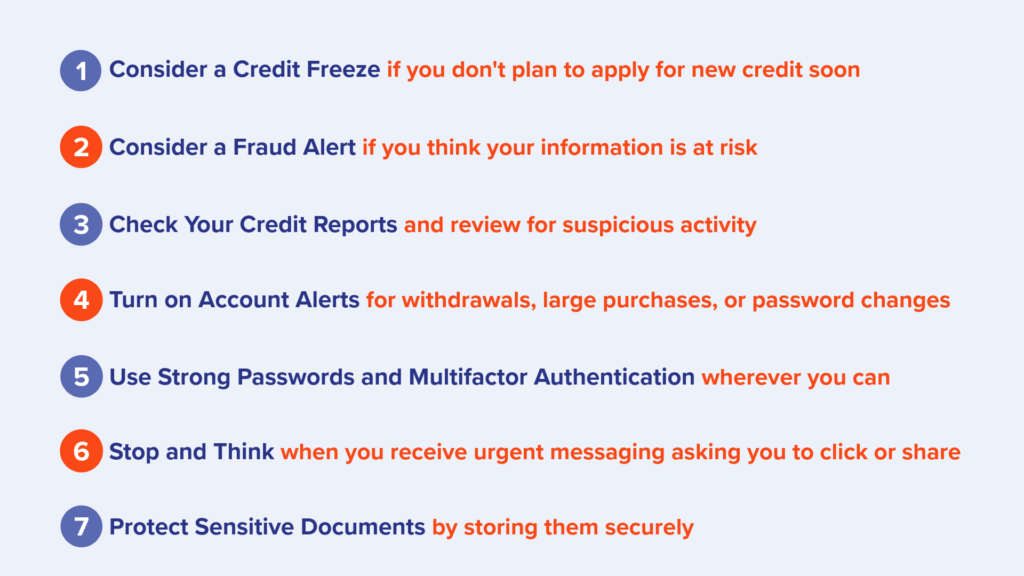
7 Steps You Can Take Today
If you only do a few things, start here.
Credit Freezes vs Fraud Alerts
Credit protection tools rank among the most recommended identity theft prevention steps for a reason. They can stop criminals from opening new credit accounts in your name.
Credit Freeze 101
A credit freeze (also called a security freeze) restricts access to your credit report. That makes it harder for someone to open a new credit account using your information. [2], [7]
A freeze can make life a little less convenient when you apply for credit, since you may need to lift the freeze temporarily. Still, many people choose this option when they want stronger protection. [2], [7]
Fraud Alert 101
A fraud alert signals to lenders that they should take extra steps to verify your identity before opening new credit. You can place a fraud alert if you think you may be a victim of identity theft, or you want extra protection. [2]
If you are not sure which option fits best, start with the FTC guidance and choose the approach that matches your situation. [2]
Spot Scams Early: Phishing and Impersonation Red Flags
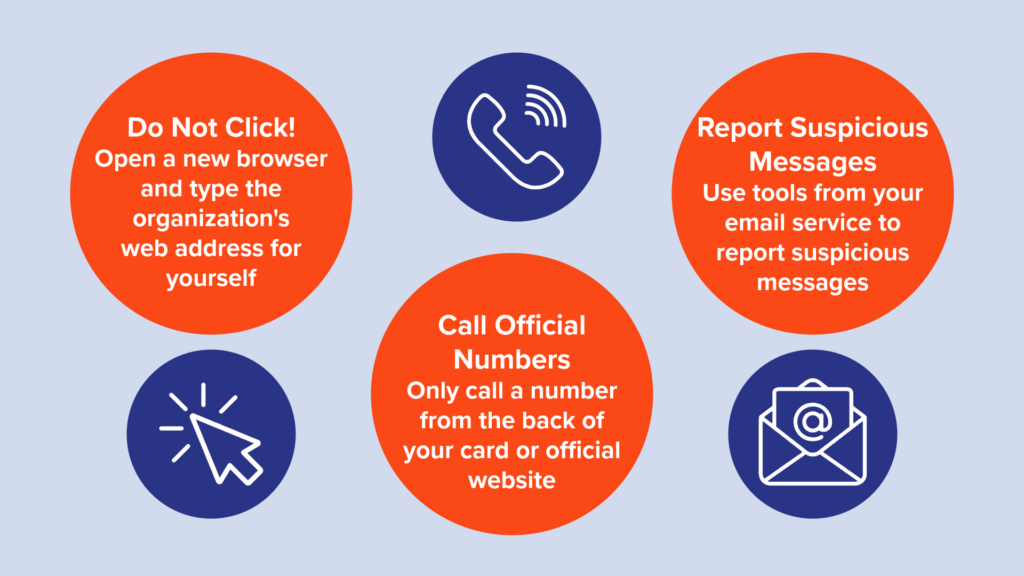
Many identity theft cases start with a scam message, call, or social media contact. Use these quick cues to protect yourself.
Common Red Flags
- A message creates urgency: “act now,” “your account will be closed,” or “you will be charged.”
- A caller asks for one-time passcodes, login credentials, or personal information.
- A message pushes you to click a link or open an attachment you did not expect.
- A request comes through an unusual channel for the situation.
What to Do if You Receive a Suspicious Message
Monitor for Warning Signs Without Stress
You do not need to check everything every day. Build a simple routine that helps you catch issues early.
- Review your bank and card transactions regularly.
- Watch for mail disruptions, which can signal someone to change your address.
- Check out your credit reports for accounts you did not open, unfamiliar addresses, or credit inquiries you do not recognize. [3], [4]
The FTC explains how to get free credit reports and points from consumers to the authorized source. [3], [5]
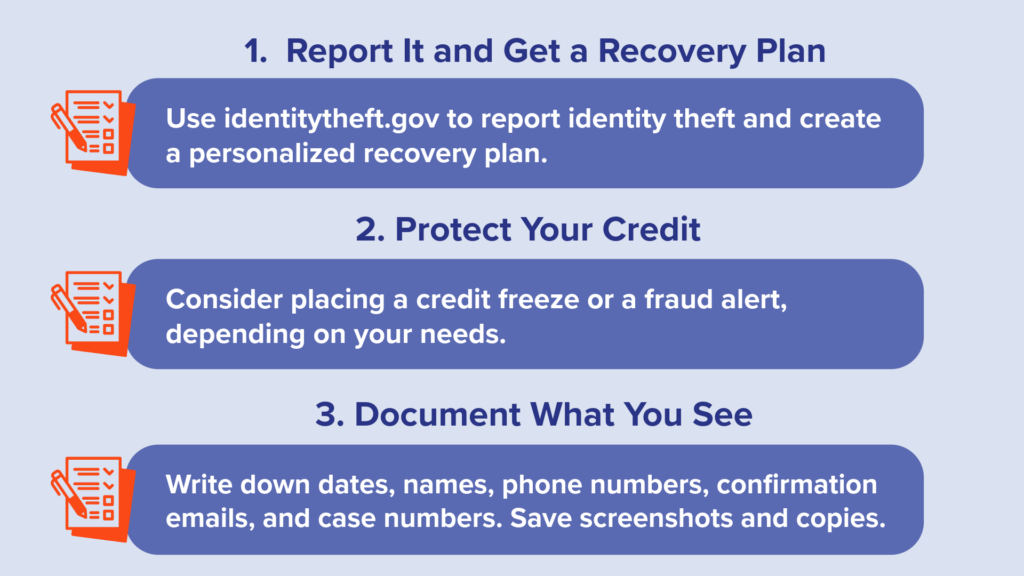
If Identity Theft Happens, Do These Three Things First
Special Situations to Know About
After a data breach: If a company notifies you about a data breach, treat that notice as a prompt to tighten your security and keep a closer eye on your credit reports. The FTC’s guidance on freezes and alerts can help you decide what to do next. [2]
Tax identity theft: If someone uses your Social Security number to file a tax return, follow the IRS identity theft for guidance for individuals. The IRS also explains steps and tools that can help protect your tax account, including information about identity theft-related procedures. [10]
How Sun East Can Help
If you ever see a transaction, you do not recognize or you suspect suspicious activity involving your Sun East accounts, contact us right away. You can also reduce risk by turning on account alerts and keeping your contact information up to date so we can reach you quickly if something looks unusual.
For broader identity theft recovery steps, bookmark identitytheft.gov so you can move fast if you ever need it. [1]
Sources
- Federal Trade Commission, IdentityTheft.gov: Identity theft reporting and recovery steps
- Federal Trade Commission, Consumer Advice: Credit freezes and fraud alerts
- Federal Trade Commission, Consumer Advice: Free credit reports
- USA.gov: Credit reports information for consumers
- AnnualCreditReport.com: About the authorized credit report site
- Consumer Financial Protection Bureau: What to do if you think you are a victim of identity theft
- Consumer Financial Protection Bureau: What a credit freeze is
- Cybersecurity and Infrastructure Security Agency: Recognize and report phishing
- National Credit Union Administration, MyCreditUnion.gov: Identity theft prevention information
- Internal Revenue Service: Identity theft guide for individuals