








Buying your first home is an exciting goal. Once you’ve decided to become a homeowner and you’ve explored the different types of mortgages available, the next step is turning that goal into a realistic plan.
That starts with answering an important question: How much house can you afford?
Knowing how much you can borrow is only part of the picture. Your personal homebuying budget needs to also account for your current expenses, future goals, upfront costs, and the ongoing responsibilities that come with owning a home.
Before you begin scheduling tours or scrolling through listings, you need to take the time to build a budget, estimate your complete housing costs, and prepare for mortgage preapproval.
Talk to a Sun East mortgage specialist and get clear answers about building your mortgage budget.
Start With a Payment That Fits Your Life
Though it’s important to use tools like mortgage calculators to get a big picture idea of what you can afford, the amount you qualify for is not necessarily the amount you will feel comfortable paying each month.
The Consumer Financial Protection Bureau recommends focusing on a mortgage that fits your budget and other financial priorities, rather than simply focusing on the largest loan amount available to you. [1]
Start by reviewing your current monthly budget, including expenses such as:
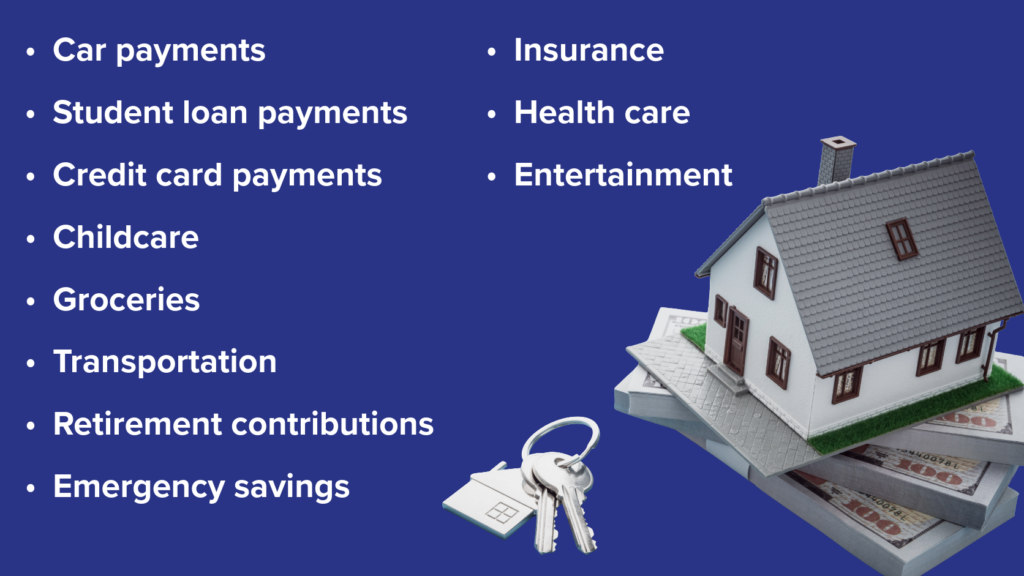
Consider which expenses may change after you buy a home. Your commute could become longer or shorter. Your utility costs could increase. You may also need to set aside money for maintenance, repairs, or new furniture.
The goal is not to stretch your budget to its limit. It is to find a monthly payment that allows you to enjoy your home while continuing to manage your other responsibilities and goals.
Check out this article on how to build a budget and stick to it if you need help building a budget.
Understand Your Debt-to-Income Ratio
The number lenders may consider when reviewing your mortgage application is your debt-to-income ratio, commonly called DTI.
Your DTI compares your monthly debt payments with your gross monthly income, which is your income before taxes and other deductions. To calculate it, add your monthly debt payments and divide that total by your gross monthly income. [2]
For example, imagine you have the following monthly payments:
- $350 car payment
- $200 student loan payment
- $100 minimum credit card payment
Your current monthly debt payments total $650. If your gross monthly income is $5,000, your current DTI would be 13%.
A lender will also consider the expected mortgage payment and other applicable housing expenses when determining whether you can manage the proposed loan. Different lenders and mortgage programs may have different DTI requirements. [2]
DTI can provide a useful snapshot, but it does not show everything happening in your financial life. Expenses such as childcare, groceries, utilities, medical costs, or financial support for family members may not appear in the calculation. That is why your personal budget remains so important.
Calculate the Complete Monthly Cost
A home’s listing price does not tell you what you will pay each month. Your total monthly housing payment may include:
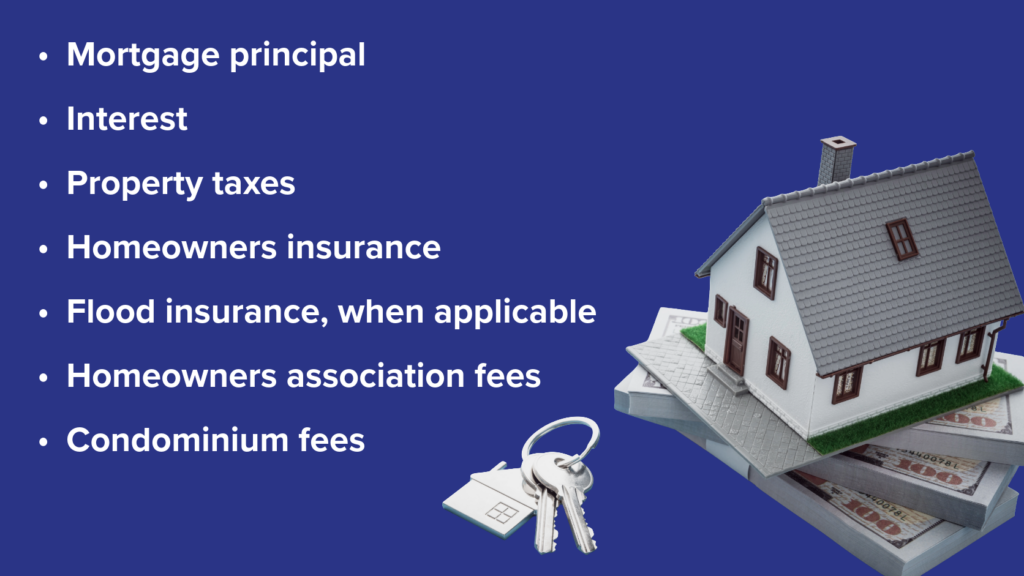
You should also budget separately for utilities, routine maintenance, repairs, and other costs of owning the property. The CFPB recommends considering property taxes, homeowners and flood insurance, utilities, maintenance costs, and HOA fees when estimating what you can comfortably afford. [3]
Some of these costs can change over time. Even when you have a fixed-rate mortgage and your principal and interest payment remains predictable, property taxes, insurance premiums, and association fees may increase.
When using a mortgage calculator, try to include as many of these expenses as possible. A calculation that only includes principal and interest may make a home appear more affordable than it will be in practice.
Plan for Your Down Payment
Your down payment is the portion of the home’s purchase price that you pay upfront. The remaining amount is generally financed through your mortgage.
You do not necessarily need to make a 20% down payment to buy a home. Down payment requirements depend on the mortgage program, the lender, your finances, and other eligibility requirements.
However, the amount you put down can affect:
- The amount you need to borrow
- Your estimated monthly payment
- Your interest rate and loan terms
- Whether mortgage insurance is required
- The amount of savings you have left after closing
If you obtain a conventional mortgage with a down payment of less than 20%, you may be required to pay private mortgage insurance, or PMI. PMI protects the lender if a borrower stops making payments, but it increases the cost of the loan. [4]
A larger down payment may reduce your loan balance and monthly payment, but putting every available dollar toward the home may leave you unprepared for other expenses. Consider how much you will need for closing costs, moving, immediate repairs, and emergency savings before deciding how much to put down.
Remember the Closing Costs
Your down payment is not the only amount you may need to bring to closing.
Closing costs are expenses related to finalizing your mortgage and transferring ownership of the property. According to the CFPB, closing costs typically range from 2% to 5% of the home’s purchase price, not including the down payment. Your actual costs will depend on factors such as the property, location, loan type, lender, and down payment. [3]
Common closing expenses may include:
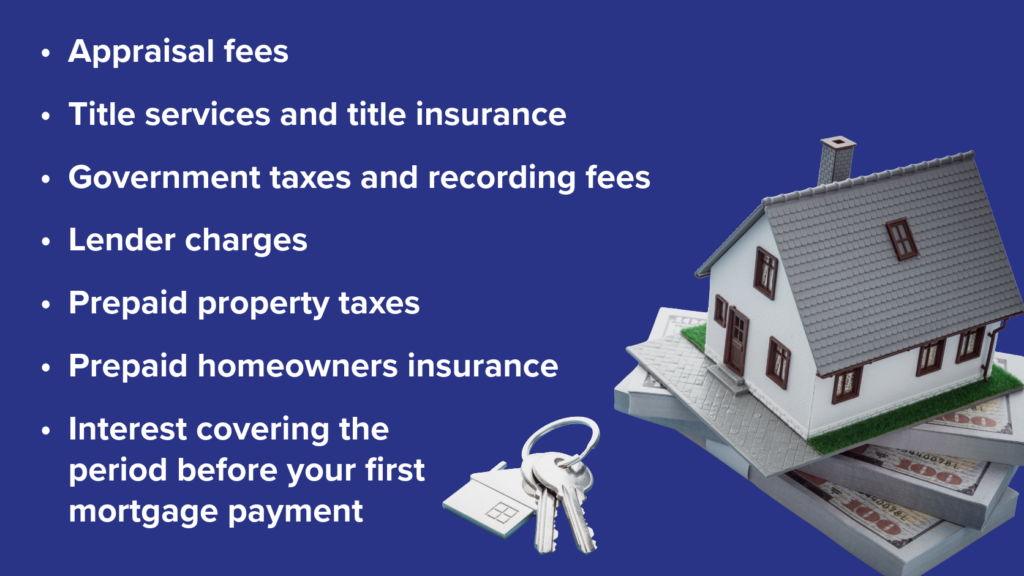
For example, estimated closing costs on a $300,000 home could range from approximately $6,000 to $15,000 using the CFPB’s general range. This is only an early estimate. Your lender will provide more specific information based on the home and mortgage you choose.
You may also need money for a home inspection, moving services, utility deposits, furnishings, appliances, or repairs after moving in. [5]
Protect Some of Your Savings
Buying a home can require a significant amount of cash, but it is important to avoid draining your savings completely.
When estimating how much cash you can put toward a purchase, the CFPB recommends first setting aside money for moving, renovations, furnishings, other savings goals, and an emergency cushion. It notes that a common rule of thumb for an emergency cushion is three to six months of expenses. [3]
The right savings amount will depend on your household and financial situation. The important point is to leave room for the unexpected.
After you become a homeowner, you may be responsible for costs that a landlord previously covered. An appliance could stop working, the roof could need attention, or a plumbing issue could require immediate repairs.
Keeping savings available can help you handle those expenses without relying entirely on credit cards or other borrowing.
Turn Your Budget Into a Home Price Range
Once you have reviewed your monthly expenses, estimated your housing costs, and considered your available savings, you can begin developing a target home price.
Try following these steps:
1. Choose a Comfortable Monthly Housing Budget
Decide how much you can comfortably spend each month on the mortgage, taxes, insurance, applicable mortgage insurance, and association fees.
Avoid basing this number only on what a lender may approve. Start with what works for your household.
2. Estimate Your Available Cash
Add up the savings and investments that could be used toward the purchase. Then subtract the money you want to keep for:
- Emergency savings
- Closing costs
- Moving expenses
- Repairs or renovations
- Furnishings and appliances
- Other financial goals
The remaining amount can help you estimate a potential down payment.
3. Test Several Scenarios
Use a mortgage calculator to see how different variables could affect your payment, including:
- Purchase price
- Down payment
- Interest rate
- Mortgage term
- Property taxes
- Insurance
- HOA or condominium fees
Try testing several purchase prices rather than focusing on one number. This can show you how a slightly higher or lower price could affect both your monthly payment and the cash needed upfront.
4. Set a Target and a Limit
Consider establishing two numbers before you begin shopping:
- Your target range: The price range that comfortably fits your budget.
- Your maximum limit: The highest price you are willing to consider without sacrificing other priorities.
Having both numbers can help you remain focused when you begin touring homes.
Know Your Budget Before You Start Shopping
Buying your first home is a major financial step, and knowing what you can comfortably afford can help you approach it with greater confidence.
Before you begin searching for homes, take time to look beyond the listing price. Consider the complete monthly cost of homeownership, how much you can put toward a down payment, the closing costs you may need to cover, and how much savings you want to keep available after the purchase.
Most importantly, remember that affording a home is about more than determining the largest mortgage payment your budget can handle. Your home should fit alongside your other expenses, savings goals, and the life you want to live after you get the keys.
Start by reviewing your budget and testing a few different home price and down payment scenarios. Sun East’s home financing calculators can help you see how changing factors such as the purchase price, down payment, interest rate, taxes, and insurance could affect your estimated monthly payment.
Once you have a comfortable price range in mind, you will be better prepared for the next step in your homebuyer’s journey: turning your budget into a plan for finding and financing your first home.
Have questions? Discuss your homebuying goals with our trained mortgage specialists and take one step closer to your dream home!
Sources
- [1] Consumer Financial Protection Bureau, “How Can I Figure Out if I Can Afford to Buy a Home and Take Out a Mortgage?”
https://www.consumerfinance.gov/ask-cfpb/how-can-i-figure-out-if-i-can-afford-to-buy-a-home-and-take-out-a-mortgage-en-118/ - [2] Consumer Financial Protection Bureau, “What Is a Debt-to-Income Ratio?”
https://www.consumerfinance.gov/ask-cfpb/what-is-a-debt-to-income-ratio-en-1791/ - [3] Consumer Financial Protection Bureau, “Figure Out How Much You Want to Spend.”
https://www.consumerfinance.gov/owning-a-home/prepare/figure-out-how-much-you-want-to-spend/ - [4] Consumer Financial Protection Bureau, “What Is Private Mortgage Insurance?”
https://www.consumerfinance.gov/ask-cfpb/what-is-private-mortgage-insurance-en-122/ - [5] Consumer Financial Protection Bureau, “What Fees or Charges Are Paid When Closing on a Mortgage and Who Pays Them?”
https://www.consumerfinance.gov/ask-cfpb/what-fees-or-charges-are-paid-when-closing-on-a-mortgage-and-who-pays-them-en-1845/